Subscribe


Other Great Blogs to Visit

Custom Text 1

Recent Comments

Monthly Archives

Comment Showcase

Calendar

February 2012
SuMoTuWeThFrSa
1234
567891011
12131415161718
19202122232425
26272829
Greenwall Mojo | Trends in "Living" Structures

Comprehensive Living Wall Data from SIUe


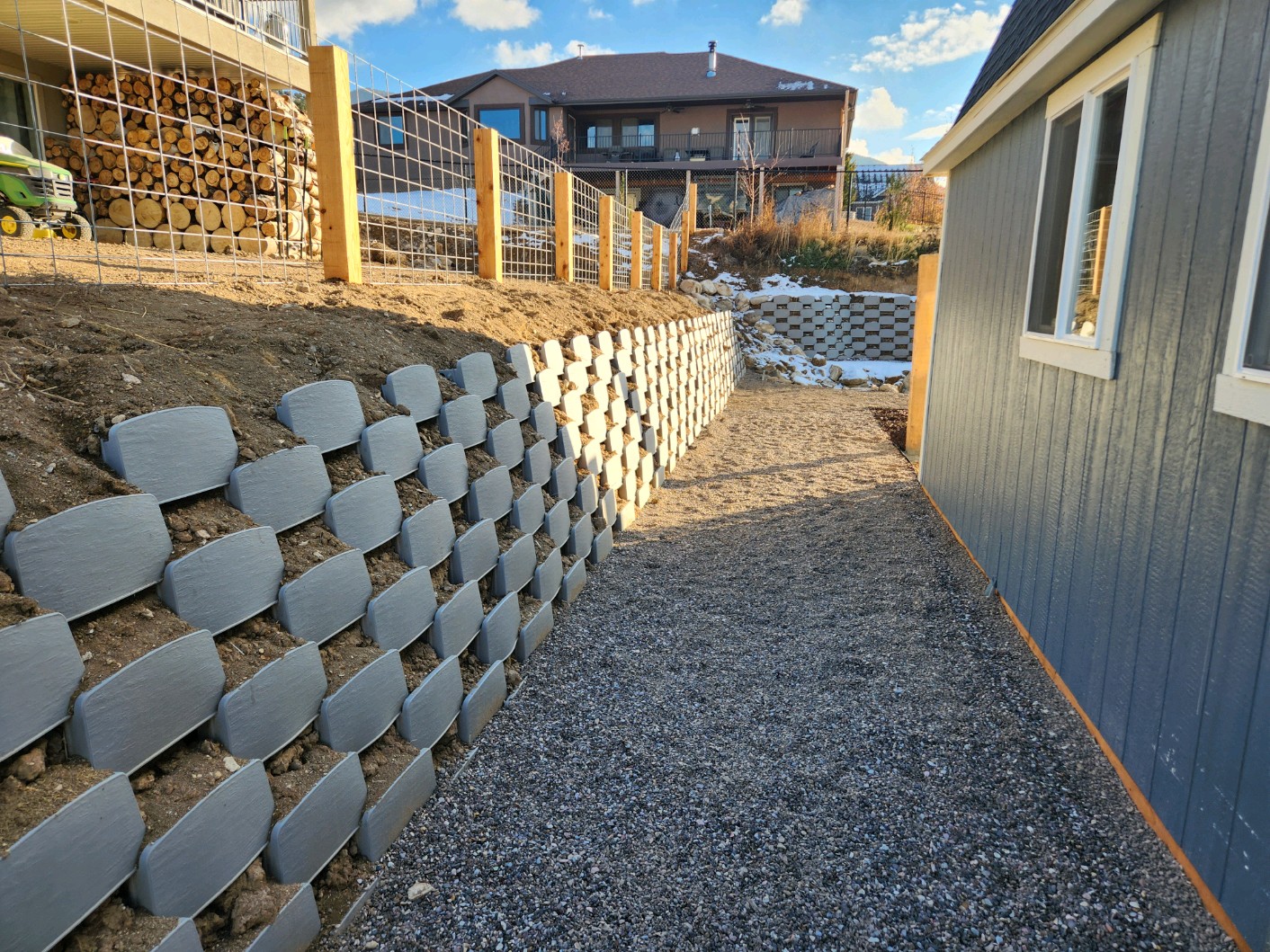
Three types of wall in this picture - panel, solid block and living wall modules.

I am always talking about "the question" - why would you choose a solid wall with no possibility for vegetation and habitat, when you can have a "living wall" at a comparable cost which brings so many benefits to the project and our environment? My thinking is, lack of understanding and product availability! This Blog, published research and widely available living wall systems are part of the answer. Enjoy the entry!

Southern Illinois University at Edwardsville has been monitoring 18 test "living walls" for several years now. Previous data has given us a better understanding of benefits derived from the selection of a living wall over more traditional "solid" or non-living walls. Green roof and green wall performance research is being undertaken in more locations by more private entities and universities than ever before. The results are shaping current product enhancements and future product development in ways that will benefit our environment and our communities. I am proud of the efforts and results from the SIUe research team. My own products are benefiting daily from the ongoing collaboration with Dr.Retzlaff and his group. Thanks guys! 


As we move forward in defining living walls as BMP's for stormwater management and land development practices, published research such as this report will lead the way. Please review the embedded paper and give me your comments.


Great structure but it could be so much more!

This wall was teaming with honey bees when I shot the pictures!

Photo Updates From SIUe Greenwall Test Site

Just received an update from Mark O. ( one of two grad students over-seeing the test trials ) at SIUe regarding the growth condition of the 18 test walls at their field site. The May 11th pictures below, show the entire site in perspective, the best growth species this year ( sedum kamchaticum ) and the un-planted control wall for perspective. Enjoy and stay connected as we publish this years test data on "heat island reduction", vegetation's effect on "retention / detention" and runoff "water quality". 


The entire site on May 11th 2011.


One of the 3 un-planted control walls that we use to establish a benchmark for the effect plants have on the fully vegetated test walls.


One of the 3 walls planted with Sedum Kamchaticum showing the best coverage so far this season. Looks like a shrub at this point! Very likely to reduce "Heat Island Effect" as well as positively impact "Runoff Water Retention" , this study year.

Why would anyone select a solid concrete wall if they did not have to? Maybe psychological testing is our next field of study??


The Basics about Living Retaining Walls


Does your yard need a retaining wall to create more useable space ---- how about making it a Living Wall?

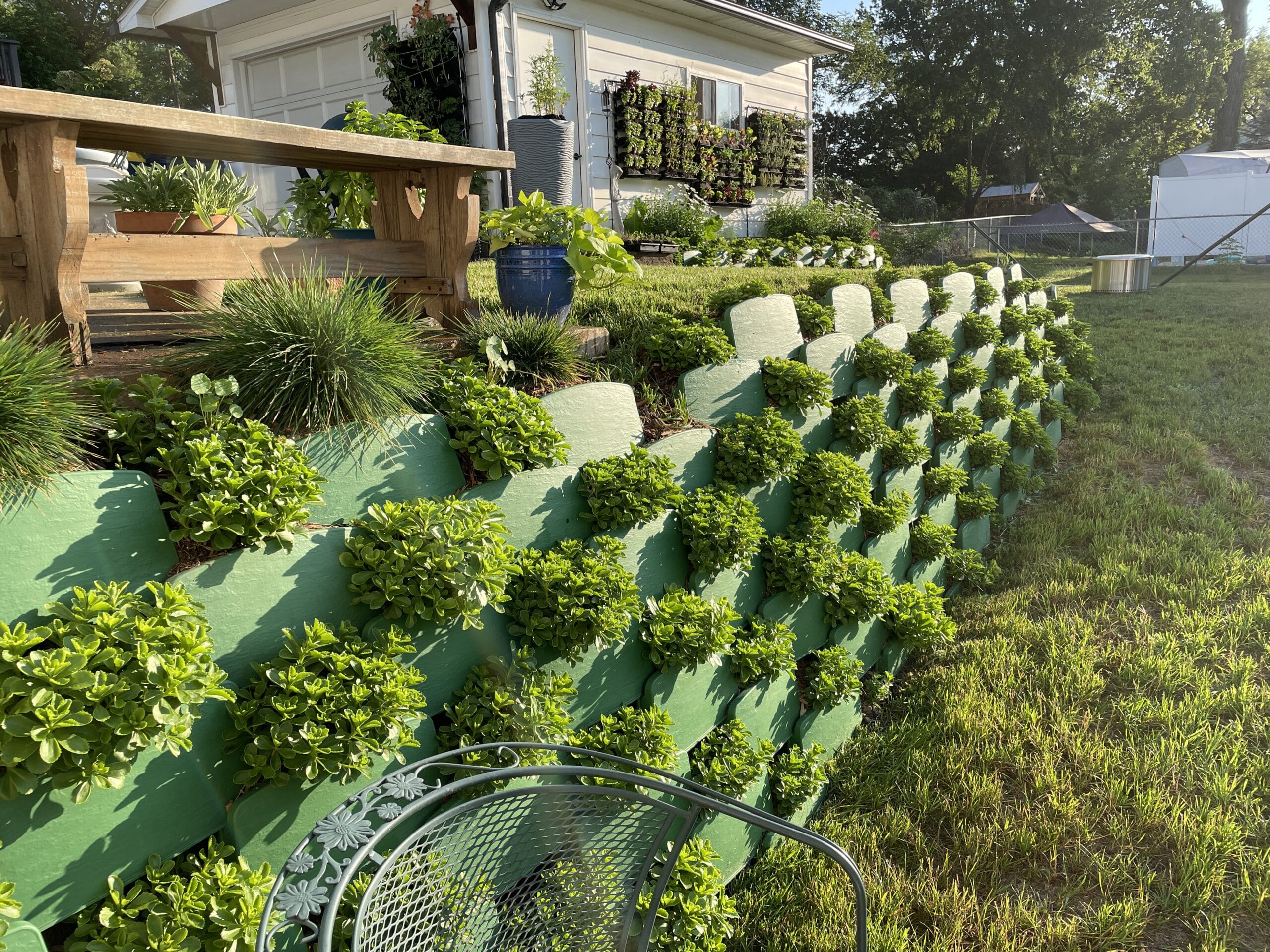
Have you ever driven past a retaining wall that was performing a structural function but it was totally covered in plant material and all you could see was the plants? If you have, then you have seen at least some version of a “living or green” retaining wall.

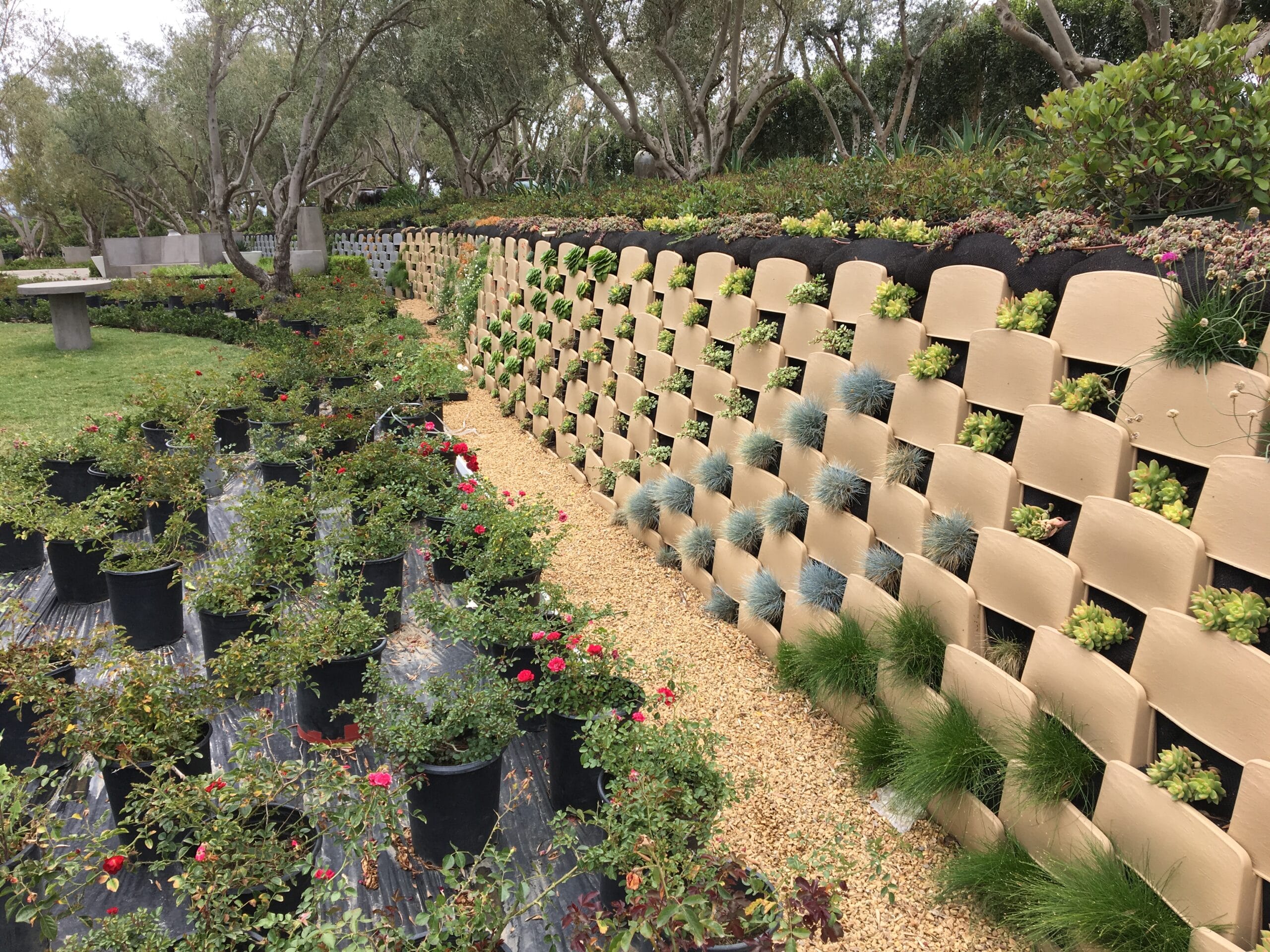
Some living retaining walls here started out the old-fashioned way, like they did in Europe, as old walls that had vines grow up to cover them so you couldn't see the stone underlayment. Other living walls that I'm so excited about are walls that were intentionally created to support plant growth. Living wall systems may come in various sizes, shapes, colors and methods but they all have one thing in common. They hold soil within the face of the wall which is easily accessible for plant material to be planted within it. This makes an acceptable culture for plants to grow over the wall face, flourish and stay there through all types of weather and seasonal conditions.


So the question is, why would you want a plant covered retaining wall – what’s wrong with a solid, traditional wall? Well, I'm not going to get to the bottom of that question in one blog segment.  I am going to start the conversation right here by inviting you to review a short slideshow that's included with this segment that represents a bit of living retaining wall "re-con" on my part. At the very least, it should be fun to look at and to see all the different varieties of living/green walls around the world. Living or green retaining walls are aesthetically different and to many people, very pleasing since they represent green space and habitat. Even if you're not into green space and habitat, a living wall does serve to moderate temperature in the built environment by keeping the retaining wall closer to the natural air temperature without absorbing and radiating the sun’s energy well after dark. Living retaining walls also filter runoff water from rain reducing the amount of rainwater that ends up running into the gutters, down the street and instantly into rivers without recharging the ground.  Living walls function a lot like green roofs and rain gardens (more on those structures later).


Living retaining walls can serve many purposes. They can be large structures holding up buildings, parking lots, roads or they can be simple backyard walls that served as a garden in a very small area. I have seen many unusually and creatively planted living walls all over the world.  Walls serving as herb gardens for those that like to cook or even chefs with restaurants. I've also seen living walls that served as wonderful vegetable gardens and community gardens for inner-city residents that just don't have enough green space to create a proper garden on flat land. As a result, I've seen gardeners harvesting strawberries and picking beans while standing up, as opposed to what I did when I was a kid, which was crawling down the rows on my hands and knees. No matter what function they serve, selecting a living wall over a more traditional solid wall is a smart choice for the environment and ultimately our communities.


Short Sampler of Living Wall Systems


Pizzo Associates Annual " Rock the Prairie" Event


Check out the link attached and consider attending this great annual event. I spoke at it last year along with a great line - up of very qualified and interesting Green industry professionals. It keeps getting better every year and the fully restored prairie that surrounds it is awe inspiring!!!

Peace,

Mark


Living Retaining Walls As Habitat For Pollinators??

We should all view this link to a recent TEDx talk on the role of pollinators in our world, then ask ourselves the question --- do the plant based living structures for which we advocate, have a positive benefit on pollinators? I thinks the answer is a resounding YES! We are not merely making a living as we promote our niche. We are educating and advocating for change that matters! For my part, I have always been captivated by lush green vegetation totally covering one of my retaining walls but it has been the flowers and the creatures that arrive with them that has blown me away. I have a passion for these methods of building and this TEDx segment really summed up what my gut has been telling me for years. Thank you Louie! I hope you enjoy it as much as I did!!!!  


Living Retaining Walls in Texas

I was in the state of Texas on business in March and found a few great examples of Living Retaining Walls. One of them was by accident and the other was part of my trip from the beginning. The walls are very different and point out that there are many ways of creating a living structure. You will have to see for yourself just how great both of these applications turned out. The "Austin" welded wire application is a short video and the "Houston" park wall is much longer but has quite a bit of useful information for those interested. Enjoy!!


New Data Coming Out of SIUe

My blogging has been sparse this year so far, due to my increased level of activity with the introduction of SmartSlope. As passionate as I am about providing good information regarding the "Why" and "How to" of Living Structures and Living Retaining Walls, I must admit that being the inventor of a new system takes plenty of time and focus. My personal library of new blog segment material is big and I probably have enough to publish weekly for the rest of the year. Just need to get going!


A good start is the new data coming out of the Living Wall research at SIUe from Dr.Retzlaff and his graduate students. The ability of planted walls to have a positive impact on the retention of rain water is becoming established.  Our ability to measure and quantify the water that does filter through the system is getting better and  we are already identifying species that have more impact that others. Have a look and comment. Much more to follow! 

Peace,

Mark Woolbright


Worldwide Examples of Living Retaining Walls

I would like to wish everyone a Very Merry Christmas and a safe New Year!! 

It has been a big year for me personally and for Living Walls as a niche. Just getting this blog and LinkedIn group going amid the initial roll-out of my latest invention ( SmartSlope ) has been a major milestone in my life. Most of my life after college has been spent as an inventor and entrepreneur in the "green" or "living" retaining wall market. Most of that has been taken up in the struggle to define the true benefits of these methods versus traditional methods, while educating the specification community in their successful application. Many things have changed through the last 20  years in regard to plant based building systems. The last 5 years has seen swift change, much more rapid adoption of sustainable methods and more importantly to us, Living Structures.  I feel like I really have lived long enough to see the light at the end of the tunnel in terms of general market awareness and acceptance of "green walls". 

I started the year as an expert panel speaker in Washington, DC at the New Green Economy Conference in January and got a great feeling of forward momentum in our niche. During the last 4 months of 2010, I collaborated with a group of "green" professionals  to develop an AIA / ASLA accredited course on GREEN WALLS. It  was for the trade association "Green Roofs for Healthy Cities" ( GRHC )and it was titled GREENWALLS 2011. The GRHC has begun to cover green walls as part of their mission and unveiled the course at their annual conference in Vancouver, BC in early December. The course was well attended and it signified the first time that any trade or advocacy group included my favorite niche of "Living Retaining Walls"  under their umbrella!!! A new day has dawned and I feel so fortunate to have been in the room and on the list of collaborators. I cannot imagine where the momentum will take our niche in the coming year but it has to be upward and we will be there to support and inform those in need of information. What a great opportunity 2011 will be!! Thanks for following.


The file above is a brief compilation of pictures showing plantable and very much, "living", retaining wall methods and systems from around the world. Lots to learn and from partners and practitioners in other countries as you will see. These systems would not be available if they did not work and did not solve a problem. The worldwide need for innovative, sustainable solutions in the built environment will continue to drive demand upward and this compilation shows that there are already many offerings available to move the niche to mainstream status. Enjoy!

Peace,
              Mark


Living Retaining Wall Research Updates - SIUe Testing

This entry is big -- in terms of the information to review and I will not post another entry for a few weeks in order to keep this one on the top of the heap. We showcase a video of the testing site with some information on our intent and recent activity, plus a narrated slide show which has screen shots of the most recent test data coming from the set-up. Finally, the segment has shots of the test data reports so you can review as long as needed without my intervention ( talking ). I am very pleased with the direction of the test project at SIUe and with the meaningful data coming out of it, so far. Please send in your thoughts and comments or contact me directly for discussion. Enjoy!

Growing with You,

                 Mark


Living Retaining Walls - Plant Selection by Growth Habit

This segment of the Blog features a video introduction followed by a narrated slide show which highlights unique display walls at Enory Knoll Farms near Baltimore and Saul Brothers Nurseries in Atlanta. Both locations used living retaining wall modules for display of "green roof" sedums and it highlights the mature conditions of many species. These walls make it  easy to visually understand the aesthetic and heat moderation differences between species, while highlighting the importance of wise selection to achieve desired performance for green building projects. 

Sample walls like these have proven to be great tools for understanding differences in grow-out performance of species planted in both roof and wall environments. We have learned that the living wall climate is more moderate than up on the roof, resulting in better plant health at grade in the walls. However, many of the best choices for roof applications just do not grow tall enough to give us all of the "heat island" moderation we have come to expect. 

Enjoy the video clip, choose plants wisely, and let us hear your comments.

Peace,

              Mark  


Blog Software
Blog Software